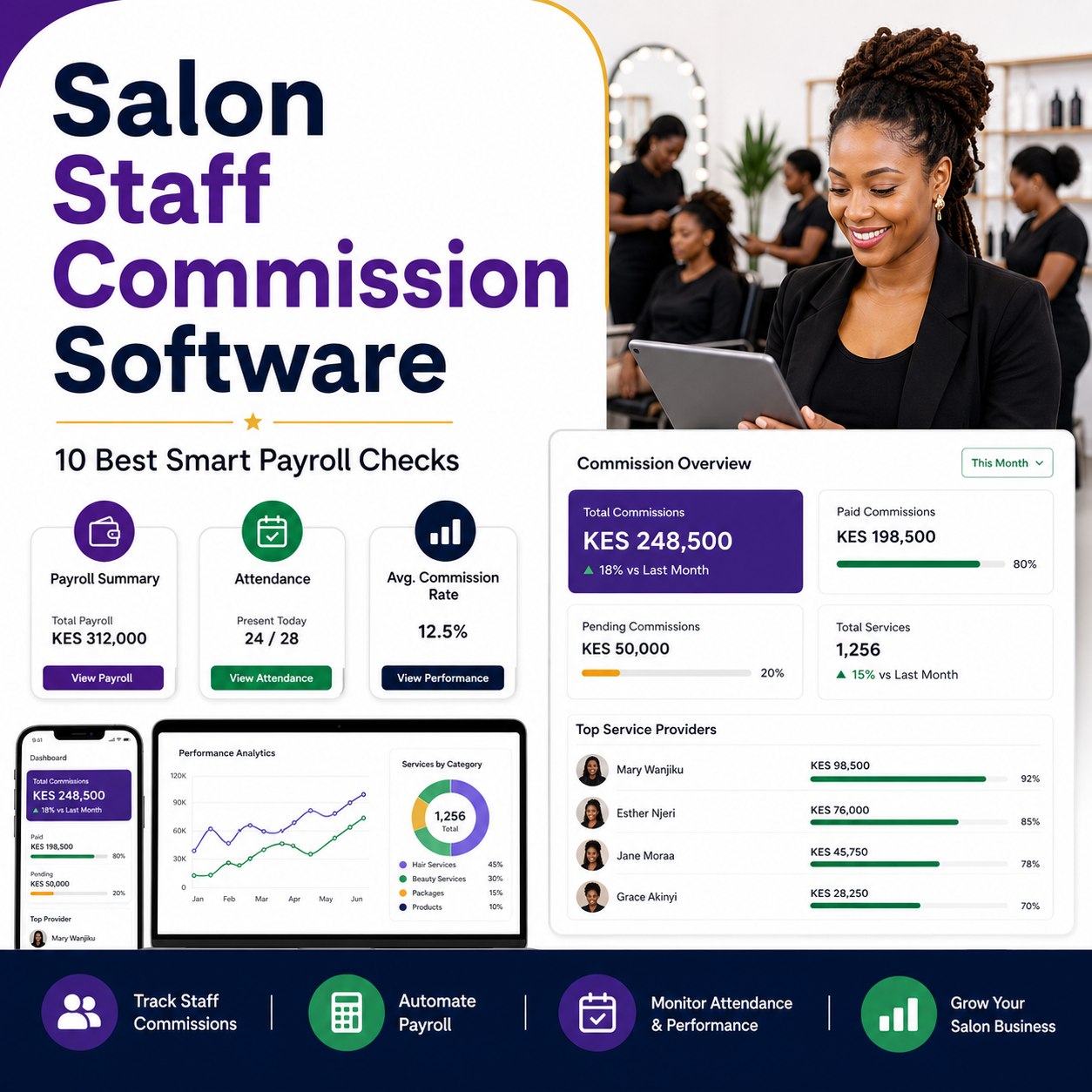
salon staff commissions Kenya: The Best Ultimate Guide to Fair Payroll Checks
salon staff commissions Kenya is becoming an important choice for salons, barbershops, spas, nail studios, and beauty businesses that want cleaner daily operations. It helps owners connect staff work, service sales, commissions, attendance, adjustments, and payroll reports. The goal is simple: help the team serve clients well while giving the owner accurate information about bookings, payments, staff work, stock, and performance.
Many beauty businesses start with notebooks, WhatsApp messages, phone reminders, calculator totals, and separate spreadsheets. That can work when the business is very small, but it becomes stressful as the number of clients, services, products, and staff members grows. PRIM gives Kenyan salon owners a more reliable way to organize daily work without making the team feel overwhelmed.
Table of contents
- Why this matters
- Daily problems it solves
- Important features to compare
- How PRIM improves the workflow
- Reports and decisions
- How it supports growth
- Why choose PRIM
Why salon staff commissions Kenya matters for modern beauty businesses
salon staff commissions Kenya helps a salon move from guesswork to structured records. A busy salon has many moving parts: clients arrive, staff members serve them, products are used, payments come through different methods, and owners still need to understand whether the business is profitable. When these records are scattered, the owner spends too much time asking for updates instead of making decisions.
Good software does not replace hospitality or skill. It supports them. When the front desk has a clear schedule, staff members know what is assigned, and checkout is organized, clients experience a smoother visit. The business also looks more professional because information is available when needed.
For Kenyan salons, local operating habits matter. Many clients use M-Pesa, some still pay cash, and others may pay deposits before a service. A useful platform should understand those workflows and help the owner track them clearly. That is why PRIM is designed around practical salon operations rather than generic office management.
Daily problems PRIM helps solve
Commission disputes can happen when staff work, discounts, partial payments, refunds, attendance, and product sales are calculated by hand. These problems may look small at first, but they can quietly reduce revenue and create confusion. One missed booking can upset a loyal client. One unrecorded product sale can distort stock reports. One unclear commission calculation can create tension with staff. Over time, these issues make the business harder to manage.
PRIM helps by keeping the important parts of the day connected. A booking can lead to a service. A service can connect to checkout. Checkout can connect to payment records, staff performance, inventory, and reports. Instead of rebuilding the day from memory, the owner can review records from one dashboard.
This is especially useful for businesses that handle both appointments and walk-ins. Many salons cannot depend only on scheduled bookings. Clients may arrive suddenly, request several services, buy retail products, or ask for a package. The system must be flexible enough for real salon life.
Important features to compare before choosing
Before choosing staff commission tracking, compare the features that affect everyday work. A beautiful dashboard is helpful, but the system must also support the actual steps your team follows from opening time to closing time.
- Staff roles and access control
- Service assignment for each team member
- Commission rules and percentages
- Attendance and schedule records
- Leave days and pay adjustments
- Product sales where commissions apply
- Payroll and commission reports
- Clear records for owner and staff review
Each feature should reduce manual work. If the system only stores information but does not improve how the team works, it will not deliver enough value. The best setup should help reception, service providers, managers, accountants, and owners each see the information they need.
How PRIM improves the salon workflow
A commission workflow helps each service connect to the correct staff member and gives owners clearer payroll records. A strong workflow allows staff members to focus on clients instead of chasing missing details. The receptionist can confirm the schedule, the service provider can see assigned clients, and the owner can check what is happening without interrupting the team.
PRIM brings several parts of salon work into one flow. Bookings and walk-ins help the team plan time. Customer profiles help staff understand visit history and preferences. POS tools help the front desk bill services and products. Payment tracking helps confirm what has been paid. Inventory tools help the business avoid stock surprises. Staff tools help owners manage roles, attendance, schedules, and commissions.
When these tools work together, the salon becomes easier to control. A client visit is no longer just a note in a book. It becomes a useful record that can support service quality, marketing, payroll, and reporting.
Reports and decisions owners should review
Staff reports help owners review services completed, sales value, commission totals, attendance, leave, and performance trends. Reports are valuable because they turn daily activity into business insight. A salon owner should be able to see sales, payment methods, popular services, stock movement, client activity, expenses, and staff performance. Those reports help answer practical questions quickly.
For example, an owner may want to know which services bring the most revenue, which days are busiest, which staff members are fully booked, or which products need restocking. Without reports, those questions depend on memory. With PRIM, the owner can use records to plan promotions, adjust schedules, reorder products, and identify areas that need training.
Helpful reporting also improves accountability. When the team knows that payments, services, products, and staff assignments are recorded, there is less room for confusion. This can reduce disputes and make end-of-day review easier.
How this supports salon growth
A growing salon needs systems before it needs more pressure. If the business adds new staff, expands services, opens another branch, or sells more retail products, manual tracking becomes even harder. PRIM helps owners build a foundation that can grow with the business.
The most successful beauty businesses usually combine excellent service with organized operations. Clients remember the quality of the work, but they also notice whether appointments start on time, payment is smooth, staff members are prepared, and follow-up is professional. Better organization supports a better client experience.
staff commission tracking also helps owners spot opportunities. If one service is growing fast, the salon can promote related packages. If retail products sell well after certain services, the team can improve recommendations. If one day is quiet, the owner can run targeted offers. Better records make these decisions easier.
Implementation plan for owners and managers
Successful software adoption starts with a simple plan. The owner should first list the areas that currently cause the most confusion. In many salons, the first pressure point is the front desk because bookings, payments, and customer questions all meet there. In other businesses, the biggest issue may be stock control, staff pay, or daily reporting. Once the main pressure point is clear, the team can introduce PRIM in a way that feels organized instead of rushed.
The next step is to clean up the basic records. Services should have clear names and prices. Products should be listed in a consistent way. Staff members should have roles that match their actual responsibilities. Customer records should include useful contact details and notes, but they should not become cluttered. This preparation makes the system easier to use and helps staff trust the information they see.
Training should focus on the tasks each person performs every day. Reception teams need to understand bookings, walk-ins, checkout, and receipts. Service providers need to understand assigned clients, completed work, and any notes that help them serve clients better. Managers need to understand reports, staff performance, stock movement, and exceptions. Owners need the dashboard, financial view, and growth reports. When each person learns the parts they actually use, adoption becomes smoother.
It is also important to create a daily routine. At opening time, the team can check bookings, available staff, and stock alerts. During the day, they can record walk-ins, services, products, and payments as they happen. Before closing, the manager can review sales, payment methods, pending balances, and any unusual entries. This routine keeps the system accurate and prevents end-of-day pressure.
Common mistakes to avoid
One common mistake is waiting too long before organizing operations. A salon may feel small today, but once clients increase, old manual habits become harder to change. Another mistake is entering incomplete information. If staff skip customer names, payment methods, product sales, or service assignments, reports become less useful. The value of PRIM grows when the team records work consistently.
Another issue is giving everyone the same access. A receptionist, accountant, service provider, manager, and owner do not need the same controls. Role-based access keeps the workflow cleaner and protects sensitive information. It also helps staff focus on the tools that matter to their jobs.
Owners should also avoid looking only at total sales. Revenue matters, but it is only one part of the picture. A strong salon review should include expenses, product usage, repeat clients, staff performance, payment methods, and unpaid balances. When these details are reviewed together, the owner can see whether the business is healthy or simply busy.
How PRIM improves client experience
Clients may never see the dashboard, but they feel the difference when the business is organized. They notice when appointments are confirmed, staff members are prepared, services are billed correctly, and receipts are available. They also notice when the salon remembers their preferences and follows up professionally.
A better client experience can increase repeat visits. When clients trust the salon process, they are more likely to return, recommend the business, and try additional services. This is why operational software is also a growth tool. It supports the quiet details that make a salon feel reliable.
For owners, the biggest benefit is confidence. Instead of guessing what happened during the day, they can review clear records. Instead of asking staff to explain every number, they can check reports. Instead of reacting late to stock problems or payment gaps, they can see issues earlier. That confidence helps the business move with more discipline.
Practical use cases for Kenyan salons
PRIM can support different types of beauty businesses. The same platform can help a small barbershop, a busy salon, a nail studio, a spa, or a multi-branch operation. The exact setup may differ, but the goal remains the same: clearer records and smoother operations.
- An owner can calculate commissions from actual service records.
- A receptionist can assign each service to the correct provider.
- A manager can review attendance before payroll.
- Staff members can trust the process because records are clearer.
These examples show why software should be practical. A salon does not need a complicated system that looks good but slows the team down. It needs a clear platform that supports the way staff and clients already behave.
Local context and trusted resources
Kenyan beauty businesses also operate in a wider business environment. Owners need to think about payments, local search visibility, tax obligations, inventory planning, and customer communication. For extra context, review PAYE guidance from KRA while planning your digital workflow.
PRIM also connects well with related salon software topics. You can compare this guide with salon management software Kenya and salon POS system Kenya to understand how booking, checkout, inventory, staff, and reporting work together. Looking at the full workflow helps owners choose software based on real business needs, not only one feature.
Why choose PRIM
PRIM is built for salons and barbershops that want a professional system without losing the practical rhythm of daily work. It supports appointments, walk-ins, POS, M-Pesa-ready payment tracking, customer records, inventory, staff roles, commissions, loyalty, reminders, reports, and multi-branch management.
The main advantage is connection. Instead of using one tool for bookings, another for payments, another for stock, and another for reports, PRIM brings the workflow together. That gives the owner a clearer view of the business and gives the team a better way to serve clients.
If your salon is still depending on paper notes, screenshots, or manual totals, now is a good time to improve the system. Start with the areas causing the most confusion, then expand into the full PRIM workflow as the team becomes comfortable.
salon staff commissions Kenya summary
salon staff commissions Kenya is a smart investment for beauty businesses that want better control, better service, and better reporting. With PRIM, salons can manage the important parts of daily work from one platform and make decisions with more confidence.
Start with PRIM today and give your salon a reliable way to manage clients, payments, staff, products, and growth.
salon staff commissions Kenya final buyer checklist
salon staff commissions Kenya should make daily salon work easier, not heavier. When owners compare tools, they should check whether the platform supports bookings, payments, staff, customers, products, reports, and follow-up from one place.
A good salon staff commissions Kenya setup also helps the team stay consistent. Reception can confirm clients, service providers can complete assigned work, managers can review activity, and owners can understand what changed during the day.
For growing salons, salon staff commissions Kenya becomes more important as services, products, staff members, and branches increase. PRIM keeps those details connected so the business does not depend on memory or scattered notes.
Before choosing staff commission tracking, review the exact workflow your team follows every day. The right system should support that workflow clearly and help the salon improve client experience, reporting, stock control, and payroll accuracy.