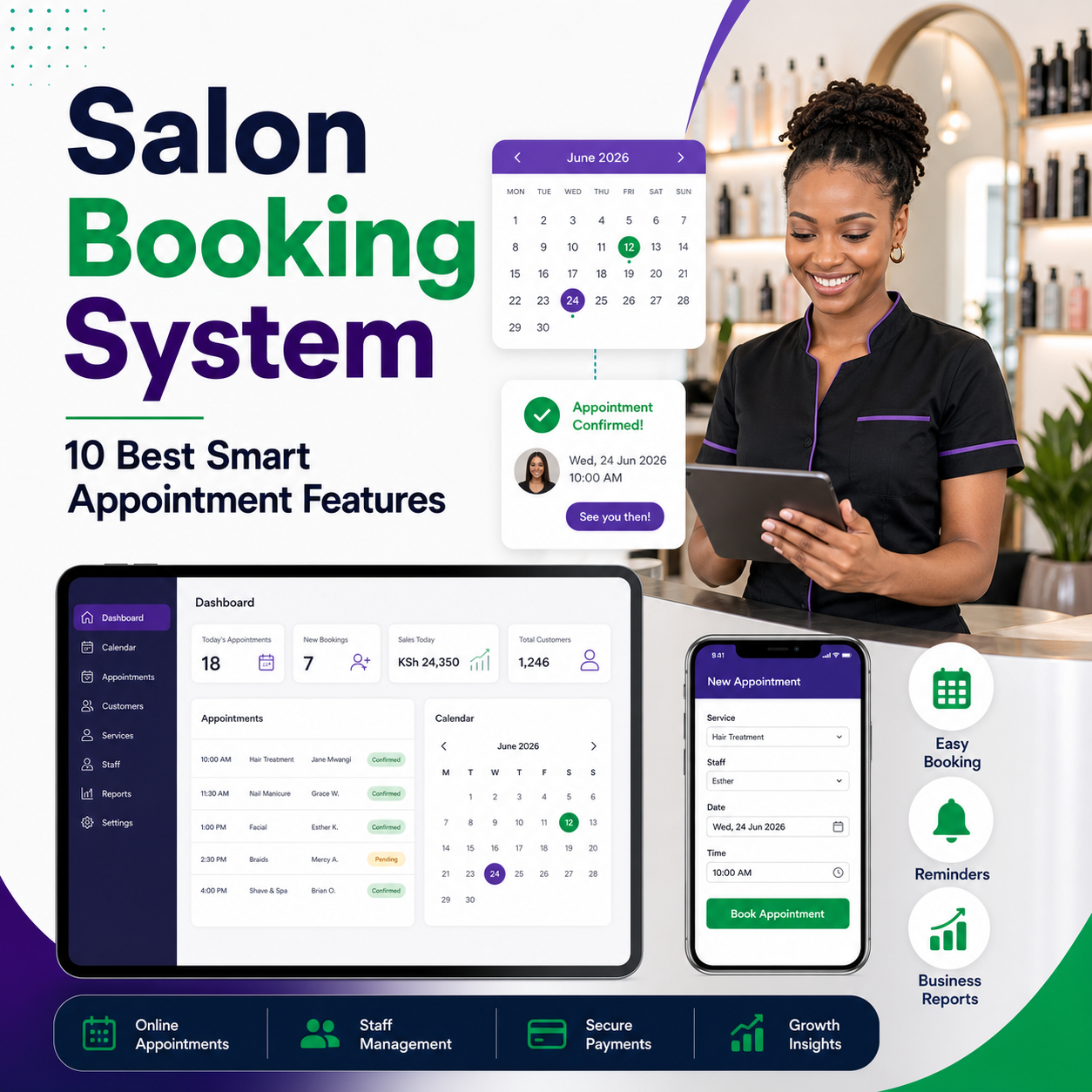
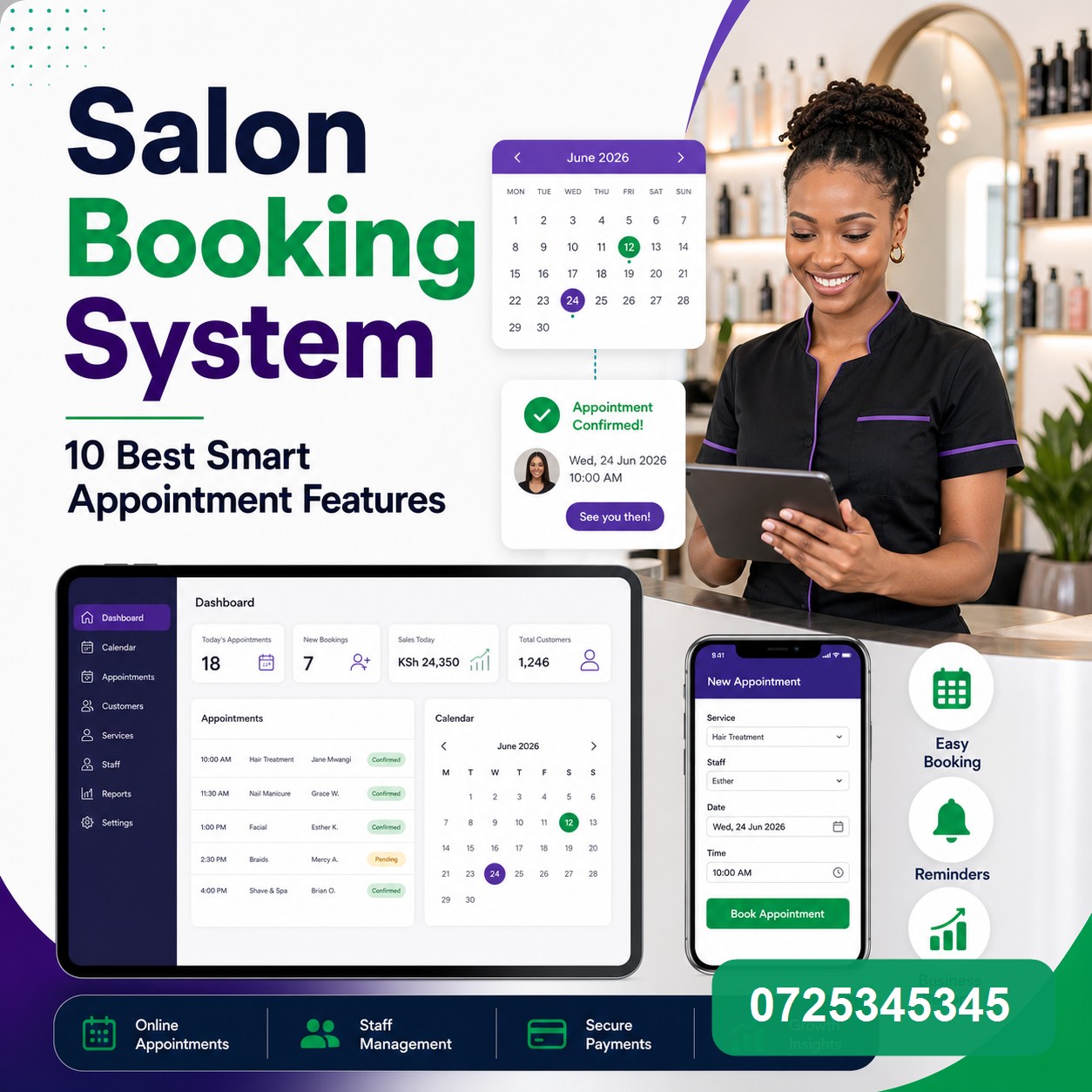
online booking salons Kenya is becoming an important choice for salons, barbershops, spas, nail studios, and beauty businesses that want cleaner daily operations. It gives clients a simpler way to request services and gives the salon a clearer schedule before the day becomes busy. The goal is simple: help the team serve clients well while giving the owner accurate information about bookings, payments, staff work, stock, and performance.
Many beauty businesses start with notebooks, WhatsApp messages, phone reminders, calculator totals, and separate spreadsheets. That can work when the business is very small, but it becomes stressful as the number of clients, services, products, and staff members grows. PRIM gives Kenyan salon owners a more reliable way to organize daily work without making the team feel overwhelmed.
online booking salons Kenya helps a salon move from guesswork to structured records. A busy salon has many moving parts: clients arrive, staff members serve them, products are used, payments come through different methods, and owners still need to understand whether the business is profitable. When these records are scattered, the owner spends too much time asking for updates instead of making decisions.
Good software does not replace hospitality or skill. It supports them. When the front desk has a clear schedule, staff members know what is assigned, and checkout is organized, clients experience a smoother visit. The business also looks more professional because information is available when needed.
For Kenyan salons, local operating habits matter. Many clients use M-Pesa, some still pay cash, and others may pay deposits before a service. A useful platform should understand those workflows and help the owner track them clearly. That is why PRIM is designed around practical salon operations rather than generic office management.
Daily problems PRIM helps solve
Missed appointments, double bookings, unclear WhatsApp messages, and forgotten follow-ups can make a salon look disorganized. These problems may look small at first, but they can quietly reduce revenue and create confusion. One missed booking can upset a loyal client. One unrecorded product sale can distort stock reports. One unclear commission calculation can create tension with staff. Over time, these issues make the business harder to manage.
PRIM helps by keeping the important parts of the day connected. A booking can lead to a service. A service can connect to checkout. Checkout can connect to payment records, staff performance, inventory, and reports. Instead of rebuilding the day from memory, the owner can review records from one dashboard.
This is especially useful for businesses that handle both appointments and walk-ins. Many salons cannot depend only on scheduled bookings. Clients may arrive suddenly, request several services, buy retail products, or ask for a package. The system must be flexible enough for real salon life.
Important features to compare before choosing
Before choosing online booking, compare the features that affect everyday work. A beautiful dashboard is helpful, but the system must also support the actual steps your team follows from opening time to closing time.
Online booking page for clients
Appointment calendar and staff availability
Walk-in queue support
Service selection and booking notes
Client contact records
Booking reminders and follow-up tasks
Deposits or payment status where needed
Reports for busy hours and popular services
Each feature should reduce manual work. If the system only stores information but does not improve how the team works, it will not deliver enough value. The best setup should help reception, service providers, managers, accountants, and owners each see the information they need.
How PRIM improves the salon workflow
A booking workflow helps the team plan time, prepare services, assign staff, and reduce pressure at the front desk. A strong workflow allows staff members to focus on clients instead of chasing missing details. The receptionist can confirm the schedule, the service provider can see assigned clients, and the owner can check what is happening without interrupting the team.
PRIM brings several parts of salon work into one flow. Bookings and walk-ins help the team plan time. Customer profiles help staff understand visit history and preferences. POS tools help the front desk bill services and products. Payment tracking helps confirm what has been paid. Inventory tools help the business avoid stock surprises. Staff tools help owners manage roles, attendance, schedules, and commissions.
When these tools work together, the salon becomes easier to control. A client visit is no longer just a note in a book. It becomes a useful record that can support service quality, marketing, payroll, and reporting.
Reports and decisions owners should review
Booking reports show busy days, peak hours, popular services, repeat clients, and staff workload. Reports are valuable because they turn daily activity into business insight. A salon owner should be able to see sales, payment methods, popular services, stock movement, client activity, expenses, and staff performance. Those reports help answer practical questions quickly.
For example, an owner may want to know which services bring the most revenue, which days are busiest, which staff members are fully booked, or which products need restocking. Without reports, those questions depend on memory. With PRIM, the owner can use records to plan promotions, adjust schedules, reorder products, and identify areas that need training.
Helpful reporting also improves accountability. When the team knows that payments, services, products, and staff assignments are recorded, there is less room for confusion. This can reduce disputes and make end-of-day review easier.
How this supports salon growth
A growing salon needs systems before it needs more pressure. If the business adds new staff, expands services, opens another branch, or sells more retail products, manual tracking becomes even harder. PRIM helps owners build a foundation that can grow with the business.
The most successful beauty businesses usually combine excellent service with organized operations. Clients remember the quality of the work, but they also notice whether appointments start on time, payment is smooth, staff members are prepared, and follow-up is professional. Better organization supports a better client experience.
online booking also helps owners spot opportunities. If one service is growing fast, the salon can promote related packages. If retail products sell well after certain services, the team can improve recommendations. If one day is quiet, the owner can run targeted offers. Better records make these decisions easier.
Implementation plan for owners and managers
Successful software adoption starts with a simple plan. The owner should first list the areas that currently cause the most confusion. In many salons, the first pressure point is the front desk because bookings, payments, and customer questions all meet there. In other businesses, the biggest issue may be stock control, staff pay, or daily reporting. Once the main pressure point is clear, the team can introduce PRIM in a way that feels organized instead of rushed.
The next step is to clean up the basic records. Services should have clear names and prices. Products should be listed in a consistent way. Staff members should have roles that match their actual responsibilities. Customer records should include useful contact details and notes, but they should not become cluttered. This preparation makes the system easier to use and helps staff trust the information they see.
Training should focus on the tasks each person performs every day. Reception teams need to understand bookings, walk-ins, checkout, and receipts. Service providers need to understand assigned clients, completed work, and any notes that help them serve clients better. Managers need to understand reports, staff performance, stock movement, and exceptions. Owners need the dashboard, financial view, and growth reports. When each person learns the parts they actually use, adoption becomes smoother.
It is also important to create a daily routine. At opening time, the team can check bookings, available staff, and stock alerts. During the day, they can record walk-ins, services, products, and payments as they happen. Before closing, the manager can review sales, payment methods, pending balances, and any unusual entries. This routine keeps the system accurate and prevents end-of-day pressure.
Common mistakes to avoid
One common mistake is waiting too long before organizing operations. A salon may feel small today, but once clients increase, old manual habits become harder to change. Another mistake is entering incomplete information. If staff skip customer names, payment methods, product sales, or service assignments, reports become less useful. The value of PRIM grows when the team records work consistently.
Another issue is giving everyone the same access. A receptionist, accountant, service provider, manager, and owner do not need the same controls. Role-based access keeps the workflow cleaner and protects sensitive information. It also helps staff focus on the tools that matter to their jobs.
Owners should also avoid looking only at total sales. Revenue matters, but it is only one part of the picture. A strong salon review should include expenses, product usage, repeat clients, staff performance, payment methods, and unpaid balances. When these details are reviewed together, the owner can see whether the business is healthy or simply busy.
How PRIM improves client experience
Clients may never see the dashboard, but they feel the difference when the business is organized. They notice when appointments are confirmed, staff members are prepared, services are billed correctly, and receipts are available. They also notice when the salon remembers their preferences and follows up professionally.
A better client experience can increase repeat visits. When clients trust the salon process, they are more likely to return, recommend the business, and try additional services. This is why operational software is also a growth tool. It supports the quiet details that make a salon feel reliable.
For owners, the biggest benefit is confidence. Instead of guessing what happened during the day, they can review clear records. Instead of asking staff to explain every number, they can check reports. Instead of reacting late to stock problems or payment gaps, they can see issues earlier. That confidence helps the business move with more discipline.
Practical use cases for Kenyan salons
PRIM can support different types of beauty businesses. The same platform can help a small barbershop, a busy salon, a nail studio, a spa, or a multi-branch operation. The exact setup may differ, but the goal remains the same: clearer records and smoother operations.
A client can request a preferred time without calling repeatedly.
The front desk can see scheduled clients and walk-ins together.
A manager can identify quiet days for promotions.
Staff members can prepare for services before clients arrive.
These examples show why software should be practical. A salon does not need a complicated system that looks good but slows the team down. It needs a clear platform that supports the way staff and clients already behave.
Local context and trusted resources
Kenyan beauty businesses also operate in a wider business environment. Owners need to think about payments, local search visibility, tax obligations, inventory planning, and customer communication. For extra context, review Google local business structured data while planning your digital workflow.
PRIM also connects well with related salon software topics. You can compare this guide with salon management software Kenya and salon POS system Kenya to understand how booking, checkout, inventory, staff, and reporting work together. Looking at the full workflow helps owners choose software based on real business needs, not only one feature.
Why choose PRIM
PRIM is built for salons and barbershops that want a professional system without losing the practical rhythm of daily work. It supports appointments, walk-ins, POS, M-Pesa-ready payment tracking, customer records, inventory, staff roles, commissions, loyalty, reminders, reports, and multi-branch management.
The main advantage is connection. Instead of using one tool for bookings, another for payments, another for stock, and another for reports, PRIM brings the workflow together. That gives the owner a clearer view of the business and gives the team a better way to serve clients.
If your salon is still depending on paper notes, screenshots, or manual totals, now is a good time to improve the system. Start with the areas causing the most confusion, then expand into the full PRIM workflow as the team becomes comfortable.
online booking salons Kenya is a smart investment for beauty businesses that want better control, better service, and better reporting. With PRIM, salons can manage the important parts of daily work from one platform and make decisions with more confidence.
Start with PRIM today and give your salon a reliable way to manage clients, payments, staff, products, and growth.
online booking salons Kenya should make daily salon work easier, not heavier. When owners compare tools, they should check whether the platform supports bookings, payments, staff, customers, products, reports, and follow-up from one place.
A good online booking salons Kenya setup also helps the team stay consistent. Reception can confirm clients, service providers can complete assigned work, managers can review activity, and owners can understand what changed during the day.
For growing salons, online booking salons Kenya becomes more important as services, products, staff members, and branches increase. PRIM keeps those details connected so the business does not depend on memory or scattered notes.
Before choosing online booking, review the exact workflow your team follows every day. The right system should support that workflow clearly and help the salon improve client experience, reporting, stock control, and payroll accuracy.
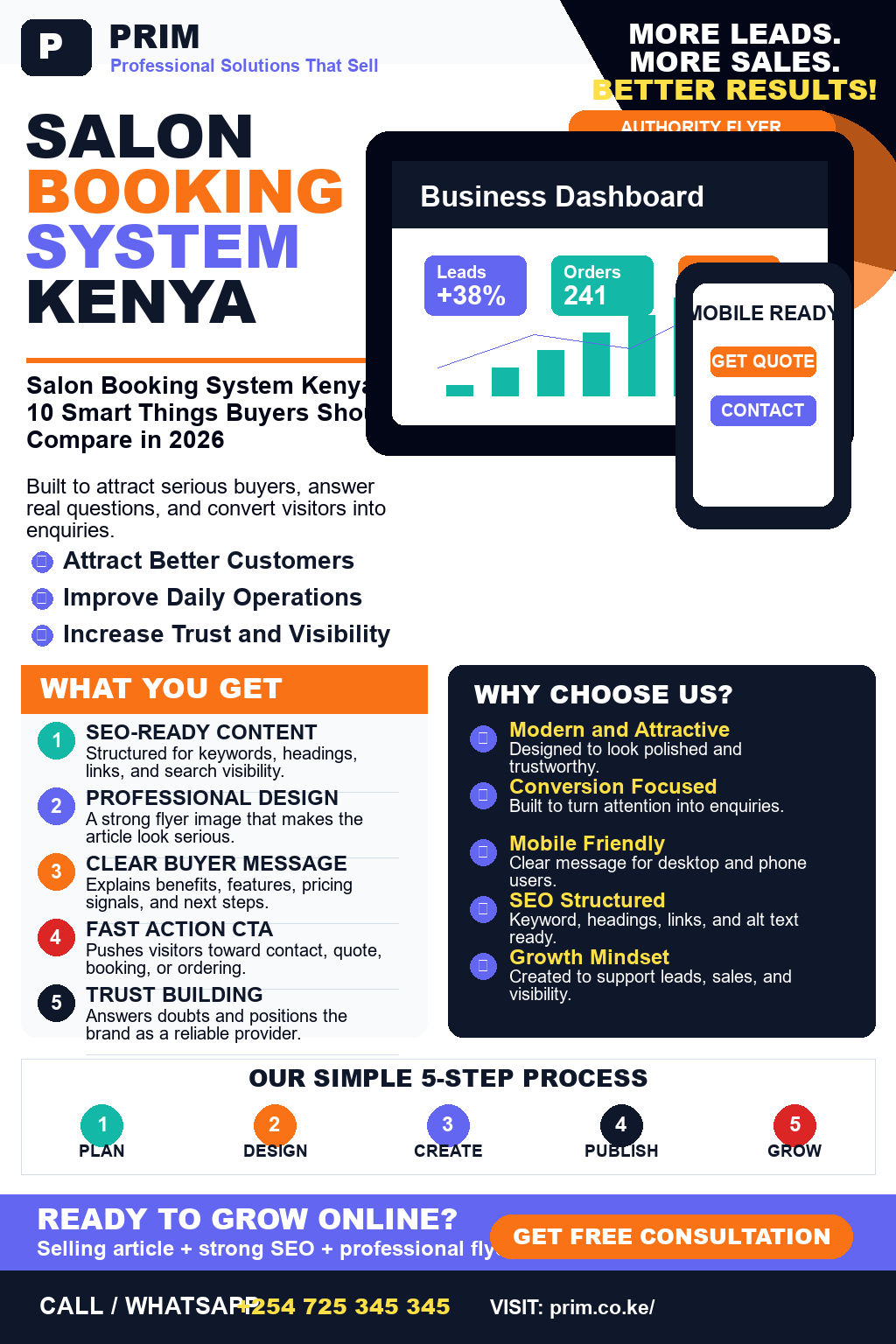
Salon Booking System Kenya: 10 Smart Things Buyers Should Compare in 2026
Salon Booking System Kenya by PRIM
Salon Booking System Kenya is a strong buyer-intent keyword because the visitor is usually comparing providers, prices, features, timelines, and proof before making a decision.
Salon Booking System Kenya is one of the fresh buyer-focused topics PRIM should publish around today because it matches what serious buyers are searching before they request a demo, quote, rollout plan, or implementation support.
For buyers, students, business owners, managers, administrators, founders, and decision makers looking for a practical solution, the real problem is manual work, unclear communication, weak records, missed deadlines, poor visibility, and difficulty comparing trusted providers. A useful article should answer the questions that serious buyers ask before they contact a provider or request a quotation.
Powered by Zama Systems. This solution is backed by Zama Systems’ practical software-delivery and automation experience.
This search usually comes from a person who already feels the pain. They may be losing enquiries, wasting time with manual work, struggling with deadlines, missing records, or comparing suppliers before paying.
The right content should make the decision easier. It should explain the problem clearly, show the features that matter, reduce fear, and give the visitor a simple next step.
PRIM can use this topic to attract qualified visitors who are closer to buying because they are searching around a real need.
Important Features Buyers Should Expect
clear onboarding – helps buyers get a clearer, faster, and more reliable outcome.
secure records – helps buyers get a clearer, faster, and more reliable outcome.
fast communication – helps buyers get a clearer, faster, and more reliable outcome.
mobile access – helps buyers get a clearer, faster, and more reliable outcome.
reports and updates – helps buyers get a clearer, faster, and more reliable outcome.
support after delivery – helps buyers get a clearer, faster, and more reliable outcome.
clear process – buyers should understand what happens before, during, and after delivery.
mobile friendly experience – users should be able to access the service or platform comfortably on phones.
useful reports or updates – clients should see progress, records, or results without repeated follow-up.
reliable support – the provider should support improvements after launch or delivery.
How to Compare Providers
Start with workflow fit. The provider should understand the exact users, tasks, deadlines, records, communication channels, payments, and reports involved.
Next, compare trust. Look for clear service pages, examples, practical explanations, realistic promises, visible contacts, and content that answers real questions.
Then compare long-term value. The best option is not always the lowest quote. The right provider should save time, reduce confusion, improve experience, and make future growth easier.
Mistakes to Avoid
Choosing Only by Price
Cheap work can become expensive if it creates weak design, unclear communication, poor support, missing features, or repeated revisions.
Ignoring the Real User
A solution must work for the people who use it daily. If users find it confusing, the project loses value quickly.
Publishing Thin Content
SEO pages should not only repeat keywords. They should answer buyer questions and explain the next step clearly.
How to Get Started
Write down the exact result you want. Include the users, current problem, documents, deadlines, records, payments, reports, and the main action you want visitors or customers to take.
Then contact a provider with a clear request. Share the pain points and ask for a practical plan, timeline, and support process.
Why Choose PRIM?
PRIM focuses on salon, spa, barber, beauty, wellness, and gym business management workflows, including bookings, staff, inventory, packages, and customer follow-up.
Salon Booking System Kenya is useful for buyers, students, business owners, managers, administrators, founders, and decision makers looking for a practical solution, especially when the current process is manual, unclear, slow, or hard to scale.
What should buyers compare first?
Compare workflow fit, support, examples, communication, features, timelines, and whether the provider understands the real problem.
Can the solution be customized?
Yes. A serious provider should shape the solution around users, records, reports, content, communication, and growth plans.
Conclusion
Salon Booking System Kenya is worth targeting because it connects to real buying intent. The best content should educate the visitor, build confidence, and make the next enquiry easy.
Deep Buyer Guide for Salon Booking System Kenya
Before making a decision, buyers should separate must-have requirements from nice-to-have extras. The must-have items are the features that protect revenue, save time, improve communication, or prevent operational confusion. A buyer searching for Salon Booking System Kenya is rarely looking for a vague overview. They normally want a practical answer that helps them choose a provider, compare options, understand implementation, and avoid a poor purchase.
The first useful step is to define the current workflow. Write down who starts the request, who approves it, where records are stored, how payments or submissions are confirmed, and which reports management needs at the end of the week or month. This exercise exposes gaps quickly. If the current process depends on scattered spreadsheets, WhatsApp screenshots, email attachments, or one person who remembers everything, the buyer should prioritize a solution that brings those records into one controlled workflow.
The second step is to compare accountability. Good providers explain how the work will be planned, who owns each stage, what information is needed before kickoff, and how progress will be reviewed. Weak providers often jump straight to price without clarifying the operating problem. For PRIM, the strongest content should help the reader think like a serious buyer: define the result, protect the user experience, check the support model, and make sure the final solution can keep improving after launch.
The third step is to check reporting and visibility. Many organizations do not only need a service; they need evidence that the service is working. Reports, dashboards, status updates, audit trails, and clear records reduce conflict because teams can see what happened, when it happened, and what still needs attention. This is especially important when the topic affects money, customers, students, members, tenants, voters, staff, stock, or compliance.
Future growth also matters. A good solution should allow more users, more records, more requests, more services, and better reports without forcing the organization to start again from zero. Buyers should ask whether the solution can handle new branches, new counties, new departments, new roles, new payment methods, or new reporting needs. The cheapest first option can become expensive if it blocks growth six months later.
Strong SEO content supports both trust and rankings. A long article should not fill space with repeated claims. It should answer real questions, explain trade-offs, use the focus keyword naturally, link to useful pages, and give the reader a clear next step. When visitors feel that the article understands their problem, they are more likely to enquire, request a quote, book a demo, or compare the provider seriously.
Implementation Checklist
Problem definition: describe the current bottleneck and the measurable result the buyer wants.
User roles: list administrators, managers, customers, students, members, tenants, staff, or external users who will interact with the process.
Data records: define the records, documents, payments, messages, reports, and approvals that must be captured.
Security: decide who can view, edit, approve, export, or delete sensitive records.
Support: confirm how training, bug fixes, updates, and improvements will be handled after launch.
These details make the buying conversation more productive. Instead of asking only for a general quote, the buyer can explain the workflow and ask for a practical rollout plan. That gives the provider enough context to recommend a sensible scope, timeline, and support path. It also helps the buyer avoid vague proposals that look cheap but leave critical work undefined.
Questions Buyers Should Ask
Buyers should ask how long implementation will take, what content or data must be prepared, how user training will work, and what happens after publishing or launch. They should also ask for examples of similar work, a clear contact path, and an explanation of what is included in the first delivery versus future improvements. These questions protect both sides because they make expectations clear before money changes hands.
Another useful question is how success will be measured. For some buyers, success means more enquiries. For others, it means faster reconciliation, fewer missing records, lower admin workload, better tenant communication, smoother elections, stronger academic support workflows, better farm records, more reliable connectivity, or clearer executive reporting. The right metric depends on the business problem, so the article should connect the keyword to outcomes that matter.
Finally, buyers should check whether the provider understands the local context. In Kenya and surrounding markets, details like M-Pesa, county operations, mobile-first users, WhatsApp communication, school and SACCO structures, landlord workflows, rural connectivity, and small-team administration can shape the success of a project. A generic solution may look good but fail in daily use if it ignores these realities.
Deep Buyer Guide for Salon Booking System Kenya
Before making a decision, buyers should separate must-have requirements from nice-to-have extras. The must-have items are the features that protect revenue, save time, improve communication, or prevent operational confusion. A buyer searching for Salon Booking System Kenya is rarely looking for a vague overview. They normally want a practical answer that helps them choose a provider, compare options, understand implementation, and avoid a poor purchase.
The first useful step is to define the current workflow. Write down who starts the request, who approves it, where records are stored, how payments or submissions are confirmed, and which reports management needs at the end of the week or month. This exercise exposes gaps quickly. If the current process depends on scattered spreadsheets, WhatsApp screenshots, email attachments, or one person who remembers everything, the buyer should prioritize a solution that brings those records into one controlled workflow.
The second step is to compare accountability. Good providers explain how the work will be planned, who owns each stage, what information is needed before kickoff, and how progress will be reviewed. Weak providers often jump straight to price without clarifying the operating problem. For PRIM, the strongest content should help the reader think like a serious buyer: define the result, protect the user experience, check the support model, and make sure the final solution can keep improving after launch.
The third step is to check reporting and visibility. Many organizations do not only need a service; they need evidence that the service is working. Reports, dashboards, status updates, audit trails, and clear records reduce conflict because teams can see what happened, when it happened, and what still needs attention. This is especially important when the topic affects money, customers, students, members, tenants, voters, staff, stock, or compliance.
Future growth also matters. A good solution should allow more users, more records, more requests, more services, and better reports without forcing the organization to start again from zero. Buyers should ask whether the solution can handle new branches, new counties, new departments, new roles, new payment methods, or new reporting needs. The cheapest first option can become expensive if it blocks growth six months later.
Strong SEO content supports both trust and rankings. A long article should not fill space with repeated claims. It should answer real questions, explain trade-offs, use the focus keyword naturally, link to useful pages, and give the reader a clear next step. When visitors feel that the article understands their problem, they are more likely to enquire, request a quote, book a demo, or compare the provider seriously.
Implementation Checklist
Problem definition: describe the current bottleneck and the measurable result the buyer wants.
User roles: list administrators, managers, customers, students, members, tenants, staff, or external users who will interact with the process.
Data records: define the records, documents, payments, messages, reports, and approvals that must be captured.
Security: decide who can view, edit, approve, export, or delete sensitive records.
Support: confirm how training, bug fixes, updates, and improvements will be handled after launch.
These details make the buying conversation more productive. Instead of asking only for a general quote, the buyer can explain the workflow and ask for a practical rollout plan. That gives the provider enough context to recommend a sensible scope, timeline, and support path. It also helps the buyer avoid vague proposals that look cheap but leave critical work undefined.
Questions Buyers Should Ask
Buyers should ask how long implementation will take, what content or data must be prepared, how user training will work, and what happens after publishing or launch. They should also ask for examples of similar work, a clear contact path, and an explanation of what is included in the first delivery versus future improvements. These questions protect both sides because they make expectations clear before money changes hands.
Another useful question is how success will be measured. For some buyers, success means more enquiries. For others, it means faster reconciliation, fewer missing records, lower admin workload, better tenant communication, smoother elections, stronger academic support workflows, better farm records, more reliable connectivity, or clearer executive reporting. The right metric depends on the business problem, so the article should connect the keyword to outcomes that matter.
Finally, buyers should check whether the provider understands the local context. In Kenya and surrounding markets, details like M-Pesa, county operations, mobile-first users, WhatsApp communication, school and SACCO structures, landlord workflows, rural connectivity, and small-team administration can shape the success of a project. A generic solution may look good but fail in daily use if it ignores these realities.
Deep Buyer Guide for Salon Booking System Kenya
Before making a decision, buyers should separate must-have requirements from nice-to-have extras. The must-have items are the features that protect revenue, save time, improve communication, or prevent operational confusion. A buyer searching for Salon Booking System Kenya is rarely looking for a vague overview. They normally want a practical answer that helps them choose a provider, compare options, understand implementation, and avoid a poor purchase.
The first useful step is to define the current workflow. Write down who starts the request, who approves it, where records are stored, how payments or submissions are confirmed, and which reports management needs at the end of the week or month. This exercise exposes gaps quickly. If the current process depends on scattered spreadsheets, WhatsApp screenshots, email attachments, or one person who remembers everything, the buyer should prioritize a solution that brings those records into one controlled workflow.
The second step is to compare accountability. Good providers explain how the work will be planned, who owns each stage, what information is needed before kickoff, and how progress will be reviewed. Weak providers often jump straight to price without clarifying the operating problem. For PRIM, the strongest content should help the reader think like a serious buyer: define the result, protect the user experience, check the support model, and make sure the final solution can keep improving after launch.
The third step is to check reporting and visibility. Many organizations do not only need a service; they need evidence that the service is working. Reports, dashboards, status updates, audit trails, and clear records reduce conflict because teams can see what happened, when it happened, and what still needs attention. This is especially important when the topic affects money, customers, students, members, tenants, voters, staff, stock, or compliance.
Future growth also matters. A good solution should allow more users, more records, more requests, more services, and better reports without forcing the organization to start again from zero. Buyers should ask whether the solution can handle new branches, new counties, new departments, new roles, new payment methods, or new reporting needs. The cheapest first option can become expensive if it blocks growth six months later.
Strong SEO content supports both trust and rankings. A long article should not fill space with repeated claims. It should answer real questions, explain trade-offs, use the focus keyword naturally, link to useful pages, and give the reader a clear next step. When visitors feel that the article understands their problem, they are more likely to enquire, request a quote, book a demo, or compare the provider seriously.
Implementation Checklist
Problem definition: describe the current bottleneck and the measurable result the buyer wants.
User roles: list administrators, managers, customers, students, members, tenants, staff, or external users who will interact with the process.
Data records: define the records, documents, payments, messages, reports, and approvals that must be captured.
Security: decide who can view, edit, approve, export, or delete sensitive records.
Support: confirm how training, bug fixes, updates, and improvements will be handled after launch.
These details make the buying conversation more productive. Instead of asking only for a general quote, the buyer can explain the workflow and ask for a practical rollout plan. That gives the provider enough context to recommend a sensible scope, timeline, and support path. It also helps the buyer avoid vague proposals that look cheap but leave critical work undefined.
Questions Buyers Should Ask
Buyers should ask how long implementation will take, what content or data must be prepared, how user training will work, and what happens after publishing or launch. They should also ask for examples of similar work, a clear contact path, and an explanation of what is included in the first delivery versus future improvements. These questions protect both sides because they make expectations clear before money changes hands.
Another useful question is how success will be measured. For some buyers, success means more enquiries. For others, it means faster reconciliation, fewer missing records, lower admin workload, better tenant communication, smoother elections, stronger academic support workflows, better farm records, more reliable connectivity, or clearer executive reporting. The right metric depends on the business problem, so the article should connect the keyword to outcomes that matter.
Finally, buyers should check whether the provider understands the local context. In Kenya and surrounding markets, details like M-Pesa, county operations, mobile-first users, WhatsApp communication, school and SACCO structures, landlord workflows, rural connectivity, and small-team administration can shape the success of a project. A generic solution may look good but fail in daily use if it ignores these realities.
Deep Buyer Guide for Salon Booking System Kenya
Before making a decision, buyers should separate must-have requirements from nice-to-have extras. The must-have items are the features that protect revenue, save time, improve communication, or prevent operational confusion. A buyer searching for Salon Booking System Kenya is rarely looking for a vague overview. They normally want a practical answer that helps them choose a provider, compare options, understand implementation, and avoid a poor purchase.
The first useful step is to define the current workflow. Write down who starts the request, who approves it, where records are stored, how payments or submissions are confirmed, and which reports management needs at the end of the week or month. This exercise exposes gaps quickly. If the current process depends on scattered spreadsheets, WhatsApp screenshots, email attachments, or one person who remembers everything, the buyer should prioritize a solution that brings those records into one controlled workflow.
The second step is to compare accountability. Good providers explain how the work will be planned, who owns each stage, what information is needed before kickoff, and how progress will be reviewed. Weak providers often jump straight to price without clarifying the operating problem. For PRIM, the strongest content should help the reader think like a serious buyer: define the result, protect the user experience, check the support model, and make sure the final solution can keep improving after launch.
The third step is to check reporting and visibility. Many organizations do not only need a service; they need evidence that the service is working. Reports, dashboards, status updates, audit trails, and clear records reduce conflict because teams can see what happened, when it happened, and what still needs attention. This is especially important when the topic affects money, customers, students, members, tenants, voters, staff, stock, or compliance.
Future growth also matters. A good solution should allow more users, more records, more requests, more services, and better reports without forcing the organization to start again from zero. Buyers should ask whether the solution can handle new branches, new counties, new departments, new roles, new payment methods, or new reporting needs. The cheapest first option can become expensive if it blocks growth six months later.
Strong SEO content supports both trust and rankings. A long article should not fill space with repeated claims. It should answer real questions, explain trade-offs, use the focus keyword naturally, link to useful pages, and give the reader a clear next step. When visitors feel that the article understands their problem, they are more likely to enquire, request a quote, book a demo, or compare the provider seriously.
Implementation Checklist
Problem definition: describe the current bottleneck and the measurable result the buyer wants.
User roles: list administrators, managers, customers, students, members, tenants, staff, or external users who will interact with the process.
Data records: define the records, documents, payments, messages, reports, and approvals that must be captured.
Security: decide who can view, edit, approve, export, or delete sensitive records.
Support: confirm how training, bug fixes, updates, and improvements will be handled after launch.
These details make the buying conversation more productive. Instead of asking only for a general quote, the buyer can explain the workflow and ask for a practical rollout plan. That gives the provider enough context to recommend a sensible scope, timeline, and support path. It also helps the buyer avoid vague proposals that look cheap but leave critical work undefined.
Questions Buyers Should Ask
Buyers should ask how long implementation will take, what content or data must be prepared, how user training will work, and what happens after publishing or launch. They should also ask for examples of similar work, a clear contact path, and an explanation of what is included in the first delivery versus future improvements. These questions protect both sides because they make expectations clear before money changes hands.
Another useful question is how success will be measured. For some buyers, success means more enquiries. For others, it means faster reconciliation, fewer missing records, lower admin workload, better tenant communication, smoother elections, stronger academic support workflows, better farm records, more reliable connectivity, or clearer executive reporting. The right metric depends on the business problem, so the article should connect the keyword to outcomes that matter.
Finally, buyers should check whether the provider understands the local context. In Kenya and surrounding markets, details like M-Pesa, county operations, mobile-first users, WhatsApp communication, school and SACCO structures, landlord workflows, rural connectivity, and small-team administration can shape the success of a project. A generic solution may look good but fail in daily use if it ignores these realities.
Deep Buyer Guide for Salon Booking System Kenya
Before making a decision, buyers should separate must-have requirements from nice-to-have extras. The must-have items are the features that protect revenue, save time, improve communication, or prevent operational confusion. A buyer searching for Salon Booking System Kenya is rarely looking for a vague overview. They normally want a practical answer that helps them choose a provider, compare options, understand implementation, and avoid a poor purchase.
The first useful step is to define the current workflow. Write down who starts the request, who approves it, where records are stored, how payments or submissions are confirmed, and which reports management needs at the end of the week or month. This exercise exposes gaps quickly. If the current process depends on scattered spreadsheets, WhatsApp screenshots, email attachments, or one person who remembers everything, the buyer should prioritize a solution that brings those records into one controlled workflow.
The second step is to compare accountability. Good providers explain how the work will be planned, who owns each stage, what information is needed before kickoff, and how progress will be reviewed. Weak providers often jump straight to price without clarifying the operating problem. For PRIM, the strongest content should help the reader think like a serious buyer: define the result, protect the user experience, check the support model, and make sure the final solution can keep improving after launch.
The third step is to check reporting and visibility. Many organizations do not only need a service; they need evidence that the service is working. Reports, dashboards, status updates, audit trails, and clear records reduce conflict because teams can see what happened, when it happened, and what still needs attention. This is especially important when the topic affects money, customers, students, members, tenants, voters, staff, stock, or compliance.
Future growth also matters. A good solution should allow more users, more records, more requests, more services, and better reports without forcing the organization to start again from zero. Buyers should ask whether the solution can handle new branches, new counties, new departments, new roles, new payment methods, or new reporting needs. The cheapest first option can become expensive if it blocks growth six months later.
Strong SEO content supports both trust and rankings. A long article should not fill space with repeated claims. It should answer real questions, explain trade-offs, use the focus keyword naturally, link to useful pages, and give the reader a clear next step. When visitors feel that the article understands their problem, they are more likely to enquire, request a quote, book a demo, or compare the provider seriously.
Implementation Checklist
Problem definition: describe the current bottleneck and the measurable result the buyer wants.
User roles: list administrators, managers, customers, students, members, tenants, staff, or external users who will interact with the process.
Data records: define the records, documents, payments, messages, reports, and approvals that must be captured.
Security: decide who can view, edit, approve, export, or delete sensitive records.
Support: confirm how training, bug fixes, updates, and improvements will be handled after launch.
These details make the buying conversation more productive. Instead of asking only for a general quote, the buyer can explain the workflow and ask for a practical rollout plan. That gives the provider enough context to recommend a sensible scope, timeline, and support path. It also helps the buyer avoid vague proposals that look cheap but leave critical work undefined.
Questions Buyers Should Ask
Buyers should ask how long implementation will take, what content or data must be prepared, how user training will work, and what happens after publishing or launch. They should also ask for examples of similar work, a clear contact path, and an explanation of what is included in the first delivery versus future improvements. These questions protect both sides because they make expectations clear before money changes hands.
Another useful question is how success will be measured. For some buyers, success means more enquiries. For others, it means faster reconciliation, fewer missing records, lower admin workload, better tenant communication, smoother elections, stronger academic support workflows, better farm records, more reliable connectivity, or clearer executive reporting. The right metric depends on the business problem, so the article should connect the keyword to outcomes that matter.
Finally, buyers should check whether the provider understands the local context. In Kenya and surrounding markets, details like M-Pesa, county operations, mobile-first users, WhatsApp communication, school and SACCO structures, landlord workflows, rural connectivity, and small-team administration can shape the success of a project. A generic solution may look good but fail in daily use if it ignores these realities.
Salon Booking System is the best starting point for salon owners who want better booking, checkout, staff, stock, customer, and reporting control. Salon Booking System helps a Kenyan beauty business replace scattered notes with one clear PRIM workflow.
Salon Booking System should be easy for the front desk, service providers, managers, and owners to use every day. Compare it with Salon Management Software and Salon POS System, and review a trusted external resource such as Google local business structured data when planning payments, stock, payroll, or local search improvements.
online booking salons Kenyais one of the most important search terms for salon owners who want a practical system for bookings, checkout, staff, customers, stock, and reporting. This guide explains what to compare before choosing software and how PRIM helps Kenyan salons run daily operations with fewer manual gaps.
Many clients no longer want to call several times just to book a salon appointment. They want to see availability, choose a service, pick a time, and confirm quickly. For busy salons and barbershops, online booking can reduce front-desk pressure and make the business easier to access.
Online booking is not just a convenience. It can become a growth tool.
Salon online booking allows clients to request or reserve appointments through a booking page. Depending on the system, the salon can control available services, working hours, staff schedules, deposits, reminders, and branch availability.
For the client, it feels simple. For the salon, it creates order.
Why online booking helps the front desk
When all bookings depend on calls, WhatsApp messages, or handwritten notes, the front desk can become overloaded. Double bookings, forgotten names, unclear service details, and missed follow-ups become common.
An online booking system helps by collecting the important details upfront:
Client name and contact
Preferred service
Preferred date and time
Staff or branch selection
Booking notes
Deposit or payment status where needed
This gives the team a clearer schedule before the client arrives.
Walk-ins still matter
Online booking does not replace walk-ins. Kenyan salons and barbershops still need to handle clients who arrive without appointments. The best system supports both. Your team should be able to add a walk-in, assign a staff member, start the service, and check out the client from the same platform.
PRIM supports appointments and walk-ins, helping salons manage scheduled clients and daily traffic in one connected workflow.
Use booking data to make better decisions
Once bookings are recorded properly, you can learn from the data. You can see your busiest days, most requested services, peak hours, and staff workload. This helps with scheduling, promotions, and hiring decisions.
For example, if Saturdays are always full but Tuesdays are quiet, you can run weekday offers. If one service is growing fast, you can promote related products or packages.
A better booking experience builds trust
Clients notice when a salon is organized. When appointments are confirmed, staff know what service is expected, and checkout is smooth, the whole experience feels more professional.
PRIM gives salons booking, walk-ins, customer profiles, reminders, POS, M-Pesa-ready checkout, and reports in one system. For growing salons, online booking can also support a more polished brand experience.
Call to action: Book a PRIM demo and see how online booking can fit your salon workflow.
When comparing online booking salons Kenya, look beyond a simple appointment calendar. The best system should connect the booking desk, the service floor, checkout, M-Pesa payment records, product sales, staff work, inventory movement, and owner reports. That connected view helps a salon know what happened today and what needs attention tomorrow.
PRIM also works better as part of a larger digital workflow. Owners can review related guides on salon management software Kenya and salon POS system Kenya, then compare those ideas with trusted external resources such as Google local business structured data. This gives the article useful internal links, a helpful dofollow external reference, and more context for readers who want to understand the wider business environment.
For most salons, the right next step is to list the tasks that still depend on paper, screenshots, or memory. If appointments, payments, commissions, product stock, or daily sales are hard to confirm, PRIM can centralize those records and make online booking salons Kenya easier to manage from one dashboard.
Salon Booking System helps salon owners compare daily operations in one place. Salon Booking System should support appointment booking, walk-ins, service checkout, product sales, M-Pesa payment records, client profiles, staff work, commissions, stock movement, and clear reports. PRIM gives Kenyan beauty businesses a practical way to manage those jobs without depending on notebooks, screenshots, or scattered spreadsheets.
Before choosing Salon Booking System, confirm that the system can record bookings, assign staff, bill services, bill products, track payment methods, send or store receipts, monitor expenses, and show daily sales. A strong Salon Booking System setup should also make it easy to review customer history, identify repeat clients, and see which services are growing.
Internal planning matters too. Read more about Salon Management Software and Salon POS System so the software decision connects booking, checkout, inventory, and staff performance. For wider business context, compare this with Google local business structured data and use the ideas to improve your salon workflow.
PRIM is designed around the way salons and barbershops work in Kenya. The platform brings bookings, POS, M-Pesa-ready payment tracking, inventory, staff commissions, customer records, loyalty, reminders, and reports into one workflow. That makes Salon Booking System easier to use because the owner can see the whole business from the same dashboard.
The best time to improve Salon Booking System is before the salon becomes too busy to control manually. When every booking, payment, product, and staff action is recorded, the owner can make decisions with confidence and give clients a more reliable service experience.