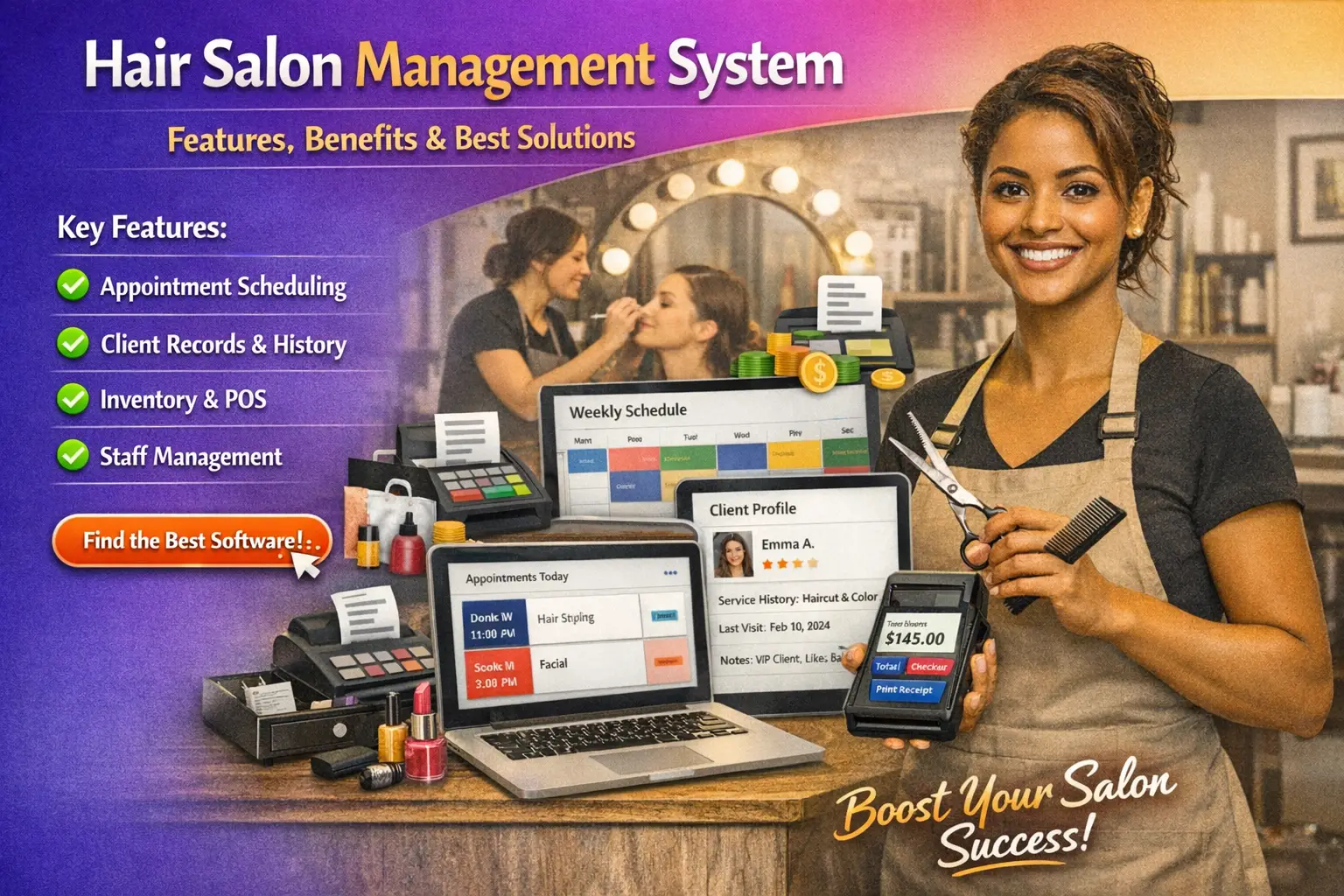
Hair Salon Management System: The Complete Guide to Streamlining Your Salon Business
In today’s fast-paced beauty industry, managing appointments, staff, inventory, and customer relationships manually can quickly become overwhelming. That’s where a hair salon management system becomes essential. With the right software, salon owners can automate operations, improve customer satisfaction, and increase profitability.
Whether you own a small neighborhood salon or manage multiple branches, implementing a hair salon management system can transform how your business operates. This guide explores what a salon management system is, its benefits, features, and how to choose the best one for your needs.
What Is a Hair Salon Management System?
A hair salon management system is software designed to help salon owners and managers automate daily operations. It acts as a centralized platform to manage appointments, billing, staff schedules, inventory, customer records, and reports.
Instead of relying on notebooks, spreadsheets, or multiple apps, everything is stored in one digital system. This improves organization, reduces errors, and saves valuable time.
Most modern salon systems are cloud-based, allowing salon owners to manage their business from anywhere using smartphones, tablets, or computers.
Why Your Salon Needs a Hair Salon Management System
Running a salon involves more than cutting and styling hair. Behind the scenes, there are many administrative tasks that require time and attention. Without proper systems, mistakes and inefficiencies can reduce profits.
Here are the main reasons every salon should adopt a hair salon management system:
1. Streamlined Appointment Scheduling
Managing appointments manually often leads to double bookings, missed appointments, and scheduling confusion.
A salon management system allows:
- Online booking for clients
- Automatic reminders
- Real-time schedule updates
- Calendar synchronization
This reduces no-shows and improves customer satisfaction.
2. Improved Customer Experience
Customer satisfaction is essential for repeat business. A hair salon management system stores client history, preferences, and service records.
With this information, stylists can:
- Remember client preferences
- Provide personalized services
- Recommend suitable treatments
- Build long-term relationships
Personalization helps build trust and loyalty.
3. Efficient Staff Management
Managing staff schedules manually can be challenging, especially in busy salons.
Salon software helps:
- Assign shifts
- Track attendance
- Monitor productivity
- Calculate commissions
This ensures fair workload distribution and improves team efficiency.
4. Better Inventory Control
Hair salons rely heavily on products such as shampoos, dyes, and styling tools. Running out of supplies can disrupt services.
A hair salon management system tracks:
- Product usage
- Stock levels
- Expiry dates
- Supplier details
It also alerts you when inventory runs low.
5. Accurate Billing and Payments
Handling payments manually increases the risk of calculation errors.
Salon management software provides:
- Automatic billing
- Digital receipts
- Multiple payment methods
- Tax calculations
This ensures transparency and accuracy.
Key Features of a Hair Salon Management System
When choosing a hair salon management system, understanding its features is crucial. Below are the essential features every modern salon software should include.
Appointment Management
Appointment scheduling is the core function of salon software.
Important capabilities include:
- Online booking
- Calendar management
- Recurring appointments
- Appointment reminders
- Waitlist management
These features ensure smooth daily operations.
Customer Relationship Management (CRM)
A built-in CRM helps maintain strong relationships with clients.
CRM features include:
- Client profiles
- Service history
- Notes and preferences
- Loyalty programs
- Marketing campaigns
This helps salons retain customers and increase repeat visits.
Billing and POS Integration
A Point-of-Sale (POS) system simplifies billing and payment processing.
POS features include:
- Invoice generation
- Discount management
- Tax calculation
- Payment tracking
- Refund handling
This ensures fast and professional transactions.
Inventory Management
Inventory tracking is critical for avoiding stock shortages.
Features include:
- Real-time stock monitoring
- Automatic stock alerts
- Product sales tracking
- Supplier management
This reduces waste and improves profitability.
Employee Management
Managing staff effectively improves overall performance.
Employee management tools allow:
- Staff scheduling
- Attendance tracking
- Commission calculations
- Performance monitoring
This helps reward productive employees.
Reporting and Analytics
Data-driven decisions improve business growth.
Analytics features include:
- Sales reports
- Revenue analysis
- Customer trends
- Product performance
- Profit margins
These insights help identify growth opportunities.
Benefits of Using a Hair Salon Management System
Adopting a hair salon management system offers many advantages that directly impact efficiency and profitability.
Increased Productivity
Automation reduces repetitive tasks, allowing staff to focus on delivering quality services.
Instead of spending hours managing paperwork, employees can concentrate on customer care.
Reduced Errors
Manual systems often lead to calculation mistakes or missed appointments.
Digital software reduces human error and ensures data accuracy.
Enhanced Customer Retention
Loyalty programs, reminders, and personalized services encourage customers to return regularly.
Happy customers are more likely to recommend your salon.
Improved Revenue Management
With accurate financial reports, salon owners can monitor income and expenses easily.
This helps maintain profitability and identify cost-saving opportunities.
Better Time Management
Automated processes save valuable time that can be invested in improving services or marketing.
Types of Hair Salon Management Systems
Different salons require different types of software. Understanding available options helps you make the right decision.
Cloud-Based Salon Software
Cloud-based systems store data online rather than on local computers.
Advantages include:
- Remote access
- Automatic updates
- Data backup
- Multi-location support
This type is popular among modern salons.
On-Premise Salon Software
On-premise systems are installed on local computers.
Benefits include:
- Full data control
- Offline access
- One-time purchase cost
However, maintenance and updates require technical support.
Mobile Salon Management Apps
Mobile-based systems allow salon owners to manage operations from smartphones.
These apps support:
- Appointment management
- Notifications
- Customer tracking
- Payment processing
Ideal for small salons and mobile stylists.
How to Choose the Best Hair Salon Management System
Selecting the right hair salon management system requires careful evaluation.
Here are key factors to consider.
Ease of Use
The software should have a simple interface that staff can learn quickly.
Complicated systems reduce productivity.
Customization Options
Every salon operates differently. Choose software that allows customization of services, pricing, and workflows.
Integration Capabilities
The system should integrate with:
- Payment gateways
- Accounting software
- Marketing tools
- SMS/email services
Integration improves overall efficiency.
Data Security
Customer information must be protected.
Look for systems with:
- Data encryption
- Secure login
- Backup options
Security is essential for customer trust.
Cost and Pricing
Compare pricing models before choosing.
Common pricing structures include:
- Monthly subscription
- Annual subscription
- One-time purchase
Ensure the features justify the cost.
How a Hair Salon Management System Improves Customer Experience
Customer experience plays a major role in salon success.
A hair salon management system enhances the client journey in several ways.
Online Booking Convenience
Clients can book appointments anytime without calling the salon.
This increases accessibility and reduces workload.
Automated Reminders
Reminder messages reduce missed appointments.
This improves schedule efficiency.
Loyalty Programs
Rewarding loyal customers encourages repeat visits.
Points-based systems boost customer retention.
Personalized Services
Customer history allows stylists to deliver customized services.
Personalization improves satisfaction.
Challenges Solved by Hair Salon Management Systems
Many salons struggle with common operational challenges.
A hair salon management system provides solutions to these problems.
Managing High Customer Volume
Busy salons often experience scheduling conflicts.
Automated booking systems handle large volumes efficiently.
Tracking Financial Performance
Manual accounting makes financial tracking difficult.
Software generates accurate financial reports instantly.
Handling Multiple Branches
Multi-location salons need centralized control.
Management systems allow centralized monitoring.
Reducing Operational Costs
Automation reduces paperwork and administrative expenses.
This lowers operational costs over time.
Future Trends in Hair Salon Management Systems
Technology continues to evolve, bringing new innovations to salon management.
Here are emerging trends shaping the future.
Artificial Intelligence Integration
AI-powered tools analyze customer behavior and suggest services.
This improves marketing effectiveness.
Contactless Payments
Digital wallets and contactless payments are becoming standard.
They improve convenience and hygiene.
Data-Driven Marketing
Advanced analytics enable targeted marketing campaigns.
This increases conversion rates.
Mobile-First Solutions
More systems are being designed primarily for mobile devices.
This supports on-the-go management.
Best Practices for Implementing a Hair Salon Management System
Proper implementation ensures maximum benefits.
Follow these best practices:
Train Your Staff
Provide training sessions to ensure employees understand how to use the system effectively.
Start with Core Features
Focus on essential features first, such as scheduling and billing.
Gradually add advanced features.
Backup Your Data
Regular backups prevent data loss.
This ensures business continuity.
Monitor System Performance
Regularly review system performance and update settings as needed.
Conclusion
A hair salon management system is no longer a luxury—it is a necessity for modern salon businesses. From appointment scheduling and customer management to inventory tracking and financial reporting, salon software simplifies operations and boosts efficiency.
Investing in the right hair salon management system allows salon owners to save time, reduce errors, improve customer satisfaction, and increase revenue. As technology continues to evolve, adopting smart management tools will give your salon a competitive edge in the beauty industry.
If you want your salon business to grow, streamline operations, and deliver exceptional customer experiences, implementing a reliable hair salon management system is the smartest step forward.
Leave a Reply